66 |
Oilfield Technology
May
2016
dissolvable frack plug prompted the company to begin developing theMVP,
whichwas created by pairing the dissolvable frack ball technologywith a
dissolvable sealing element and a slip design.
During the research and development phase of theMVP, the company
continued to focus onwell completion efficiencies and how to address the
costly challenges related towell intervention. A significant hurdle is the
inherent limitation of coiled tubing’s effective reach – approximately 18 000 ft.
The trend in longer laterals to accessmore hydrocarbons has becomemore
andmore common inNorth American shale plays. If operators are dealing
with an especially long lateral, theywill be unable tomill out plugs near
the toe of thewell. A dissolvable stage isolation optionwould be ideal for
operators, as it would eliminate the need for coiled tubing in the toe section
of the long lateral. In addition, if the lateral is problematic, it will present a
challenging environment when attempting to remove all composite plugs in
the lateral. Coiled tubing, while proven and effective, is associatedwith risks
and limitations that dissolvable technology can prevent.
With a goal inmind, the design process for the plugwas underway. Early
generations of the plug included cast iron slips, an aluminumshear sub, and
a non-dissolvable sealing element. These non-dissolvable components have
since been replacedwith dissolvablematerials that vanish downhole. The
newest generation of theMVP offers 99.5%dissolution, which equals less
than one cubic inch of solids leftbehind. This reduction in non-dissolvable
material is largely achieved through the utilisation of newdissolvable
slips, which consist of a dissolvablemetal and cast iron buttons, creating a
dependable set downhole and accounting for less than one cubic inch of
cast ironmaterial per plug. The plug features a fully dissolvable shearing
mechanismand sealing element. It also includes a dissolvable pump down
kit that reduces fluid usage during the conveyance of the tools in horizontal
applications. Another feature of the plug is that it does not require any
changes to standardised plug and perf completionmethodology.
The newplug in fact works in the sameway as traditional frack plugs. The
running procedures and setting equipment used for theMVP are no different
thanwhat the company uses for its composite plug line.
As themarket begins to find the ‘bottom’ for the price of oil, the demand
for dissolvable technology has continued to gain traction. Despite the
industry’s historical preference for composite plugs inwellbore isolation and
coiled tubing for removal operations, the plug helps operators significantly
reduce time to production and eliminating potential risks associatedwith
intervention even at a price roughly equal to that of the traditional method
involving composites and coiled tubing. And, thus, a shift in demand from
‘eliminating coiled tubing’ to ‘faster time to production’ has been created.
In February 2016, an operator in the Eagle Ford ran 63MVPs in a long
horizontal well. The plugswere set in 5.5 in. casingwith a bottom-hole
temperature of 281˚F and a total vertical depth of roughly 10 000 ft. The
plugwas designed to dissolve predictably in temperatures ranging between
180 and 350˚F and hold strong up to 10 000 psi. Therefore, all plugs dissolved
and thewell was put on productionwithout issue. Thewell was part of a four
well pad that consisted of over 180 stages, all of whichwere isolated using the
MVP.
The plug is dependable in a variety of wellbore environments and is
designed to function in awide range of downhole temperatures, pressures,
and casing sizes.
Throughout its existence on themarket, theMVP has seen over 8000 runs
in 550+wells providingmore than 45 operatorsworking in both domestic and
foreign playswith the opportunity to start producing their wellsmuch faster
andmore reliably.
Though cheaper prices are nowa principal factor in completion
operations, some operators are choosing to focus on the reliability, efficiency,
and elimination of potential risks involvedwithmill-outs. Eliminating these
risks, reducing completion costs, and reducing the amount of time it takes to
complete awell is at the forefront of theminds of every operator in today’s
market.
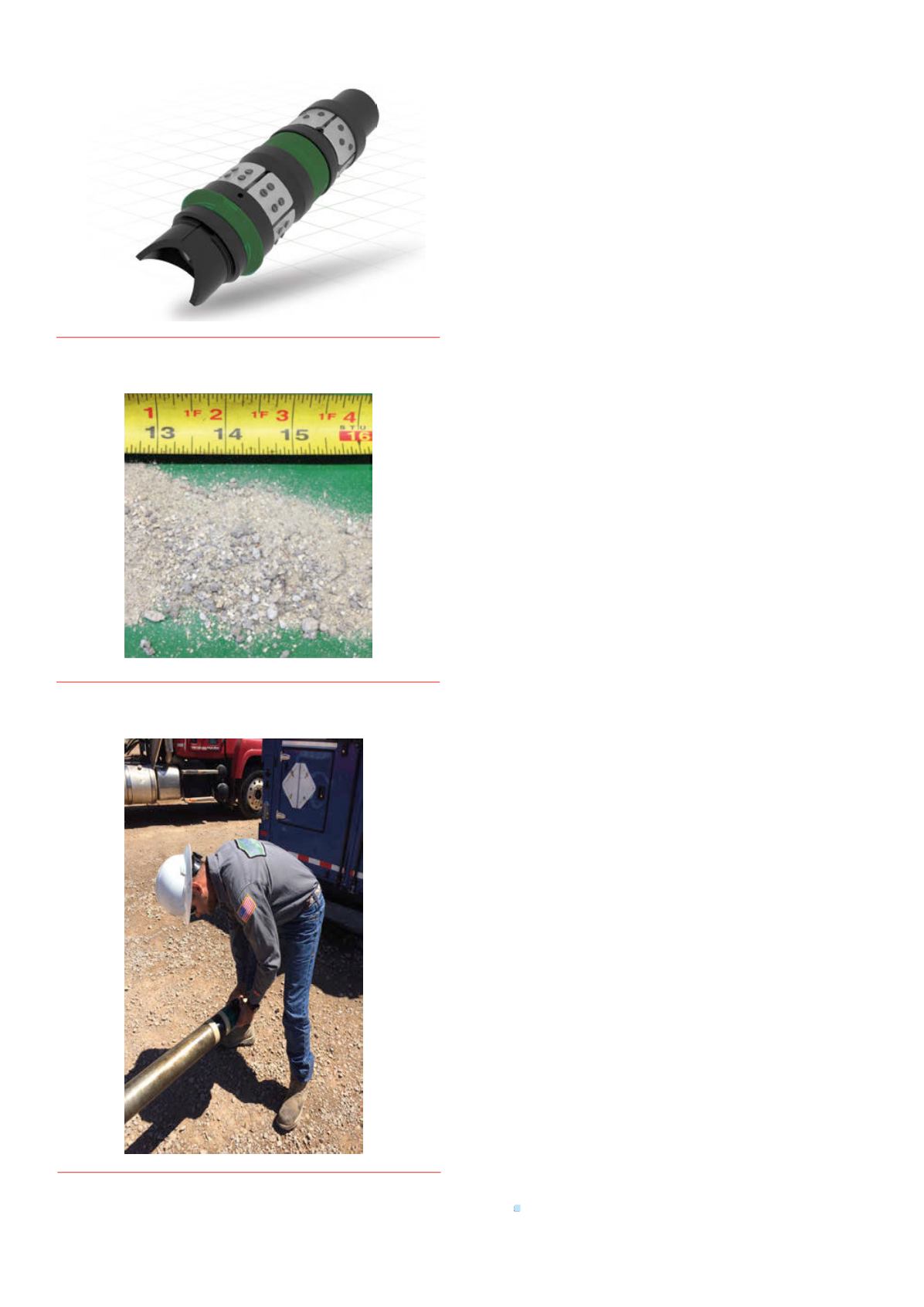
Figure 1.
Atmore than 99.5%dissolvable, the plug is designed to
increasewell completion efficiency.
Figure 2.
Dissolvable solids, similar to sand in size and texture, retrieved
from initial testing of the plug.
Figure 3.
AMagnumOil Tools Service Representative inspects a
vanishingplug ready to be sent downhole.


