36
|
Oilfield Technology
May
2016
FIGHTING
ENVIRONMENTAL
EXTREMES
I
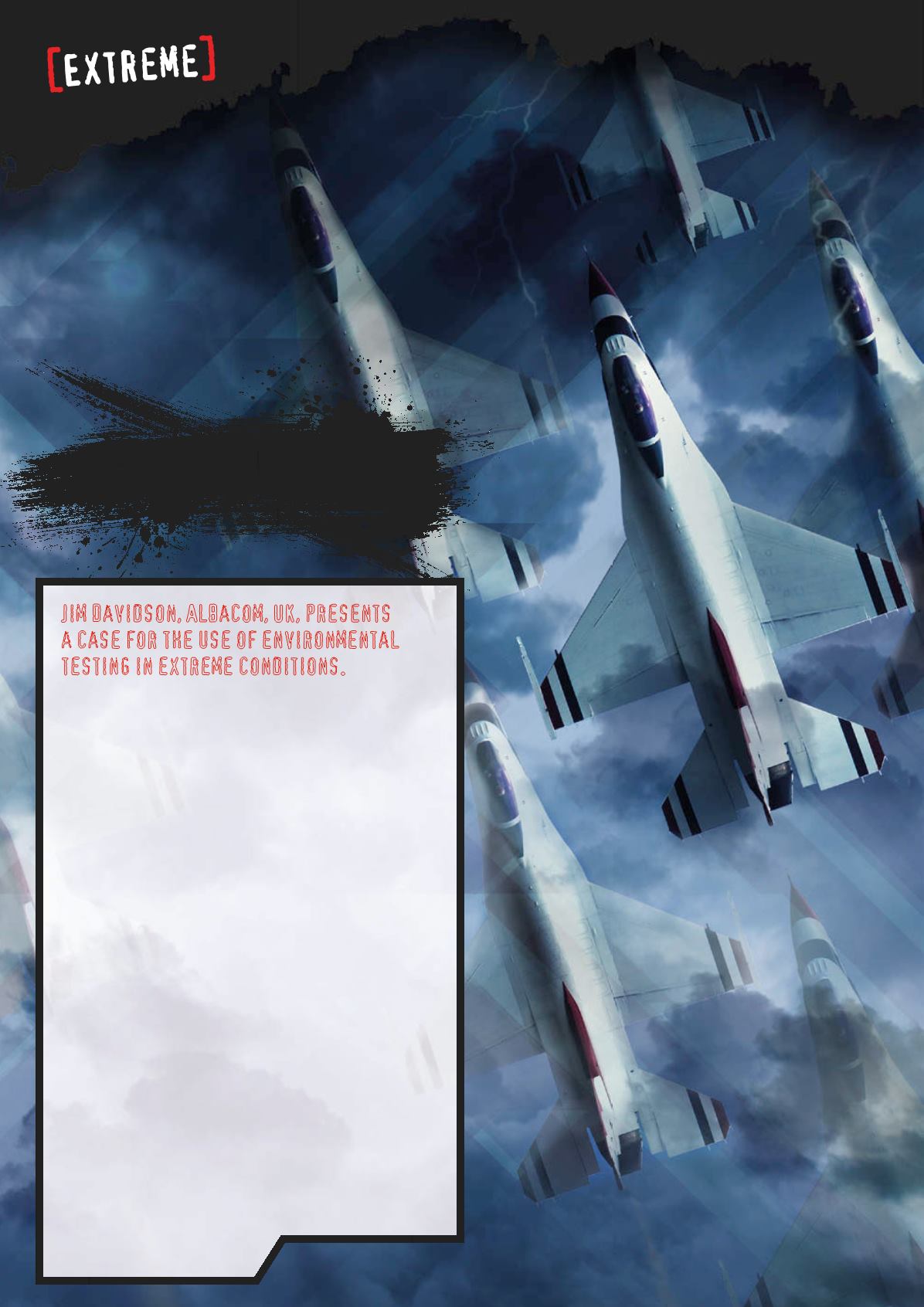
n few other places are extreme conditions realised so vividly
than on board military fast jets. The very nature of a combat
aircraft means that it must withstand sudden and violent
variation in altitude pressure, changes in temperature (-55˚C
to +70˚C), on ground considerations such as sand and dust
and the unpredictable risk of bird strike. Similar requirements
are also true of the machinery used in the oil and gas market
– subsea equipment, such as remotely operated vehicles
(ROVs), umbilical cords of divers and the tethering systems of
floating production units, are exposed to equally challenging
conditions with water depth variation, freezing temperatures
and changing tides.
The dynamic oil and gas industry is no stranger to change
and right now it has never been so important to streamline
processes to minimise costs. The nature of aerospace and
defence means that large projects are delivered over extended
periods of time. The oil and gas industry has vast synergies
in the way in which contracts are delivered, and utilising
transferable skills will make the industry more cost-effective in
challenging times.
A critical part of any project design is testing equipment
to ensure it is capable of withstanding such forces within
acceptable limits. Testing for extreme conditions is a
requirement for many industries in addition to the aerospace
and defence sector and the oil and gas industry. For
aerospace and defence, product failures are rated in terms of
consequence; from insignificant through to personnel death.
Jim Davidson, Albacom, UK, presents
a case for the use of environmental
testing in extreme conditions.


